Back to TV Scripts
Series Overview
Archimedes is a half-hour single-camera comedy set in a deliberately anachronistic Syracuse, Sicily, in 271 BCE — where the problems are ancient but the behavior is embarrassingly familiar. ARCHIMEDES (Archie), sixteen, can see how almost anything works and cannot see why evidence fails to persuade people. His homemade tremor detector says Mount Etna is going to erupt. Syracuse is busy with its SunDial Post Casts.
His fight to save the city starts in the arena's holding cells, where he meets SPARTY, a former marine turned gladiator who needs 1,000 silver to clear his debt. It runs through the palace of Governor Creon — who claims every invention as his own — and into the orbit of AMARATA, Syracuse's top SunDial influencer, and DARIA, the Alexandria-trained engineer Amarata calls her "maid," who has been tracking Etna's warning signs longer than Archimedes has.
Every episode, a real invention becomes a comic solution to an ancient problem — and the ensemble has to make it reliable, useful, and believed. Etna is Season One's clock: five months by Daria's data, six by Archimedes'. Think PLEBS meets The Great meets The Big Bang Theory: physical comedy for the immediate laugh, with character, politics, and scientific attribution rewarding closer attention.
Theme
"Give me a place to stand, and I will move the Earth. Finding a place to stand is the hard part."
Can truth improve the world when the people with the power to act benefit from the lie? Archimedes trusts measurement, because nature obeys consistent laws — and assumes people must respond to evidence the same way. Each episode proves his science right and his prediction of human behavior wrong. The invention solves the week's problem; the team — Daria making it reliable, Sparty reading the people, Amarata moving the crowd — has to turn a correct answer into something the city will actually act on.
"People don't run because a number tells them to. People run when everyone else starts running."
Sparty, from the pilot
"Give me a lever long enough and a place to stand, and I could move the earth."
"Sure. And when you're done, everyone's exactly where they started. That's why you need us."
Archimedes and Amarata, from the pilot
The Characters
Archimedes (Archie)
Protagonist · Age 16
A brilliant, literal sixteen-year-old who understands physical laws better than human behavior. He expects evidence to persuade people, struggles when pride and power win instead, and must learn that a working invention is only the beginning.
Spartacus (Sparty)
Best Friend · Gladiator
Former marine, current gladiator — in chains for moving his captain off a ship. Needs 1,000 silver to clear his debt to the service. Terse, deadpan, and the best judge of people in Syracuse: Archimedes supplies the idea, Sparty decides whether it will work on humans.
Daria
Engineer · Age 18
Trained at the Library of Alexandria; now working as an influencer's "maid" (she prefers "Manager") while doing the city's real engineering. She tracked Etna's warning signs long before Archimedes built his detector. Turns "it worked once" into "it works every time" — and is starting a school for women.
Amarata
SunDial Influencer
Syracuse's top Post Caster — her father won the Olympic pentathlon, her mother married two famous men. She can turn any room into an audience, and she's the first to hand the team its credit back. Being noticed is free; being remembered costs slightly more.
Governor Creon & Lady Agatha
The Power Couple
He claims every invention as his own — there's already a plaque. She has never once missed a fitting.
Estaria
Archie's Mother
"First I lose a husband. Now a volcano wants the boy too." Archie's father left for Alexandria twelve years ago and never came home. Estaria has been preparing for the worst ever since — and she's usually right to worry.
Inventor Spotlights
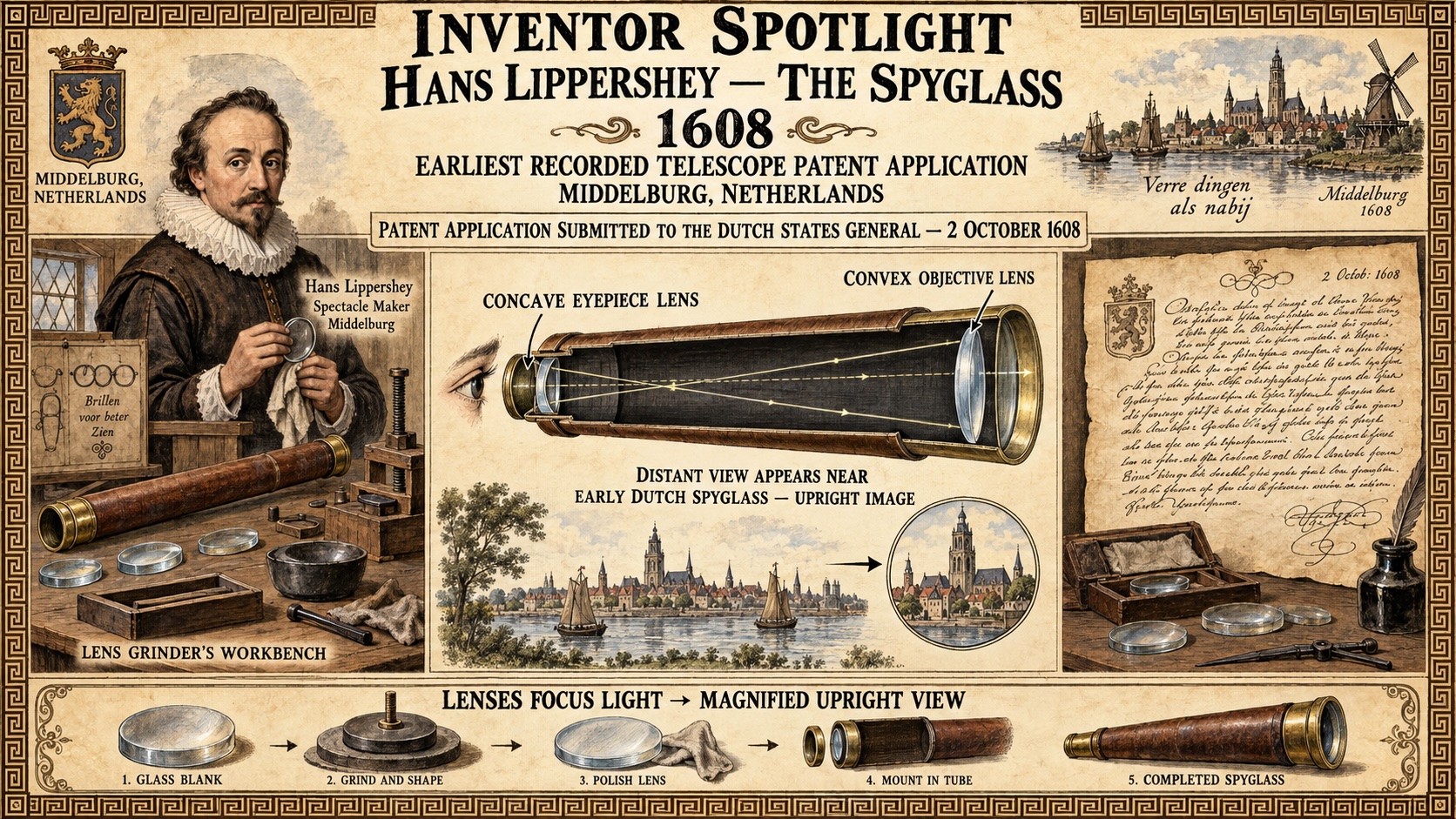
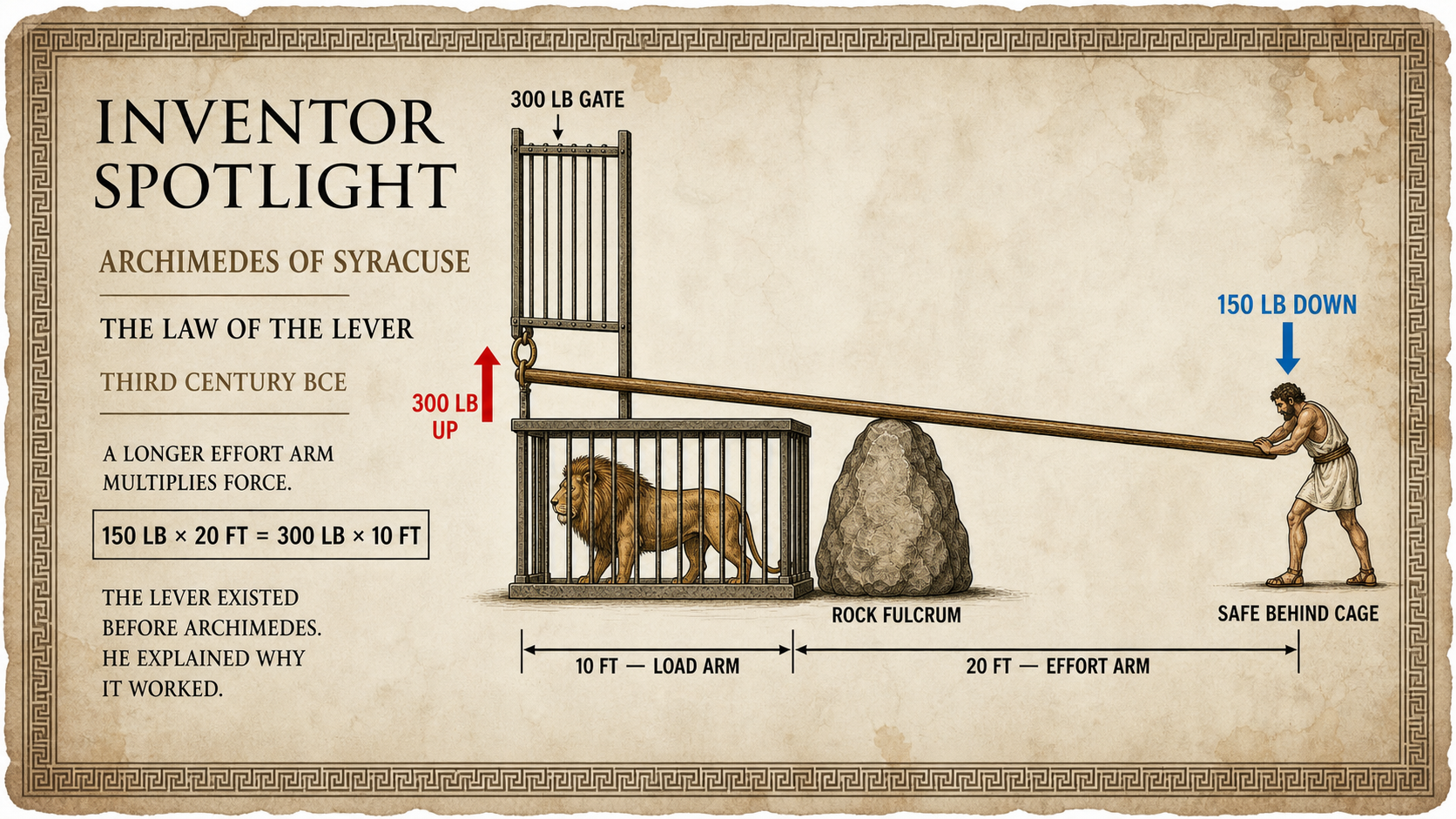
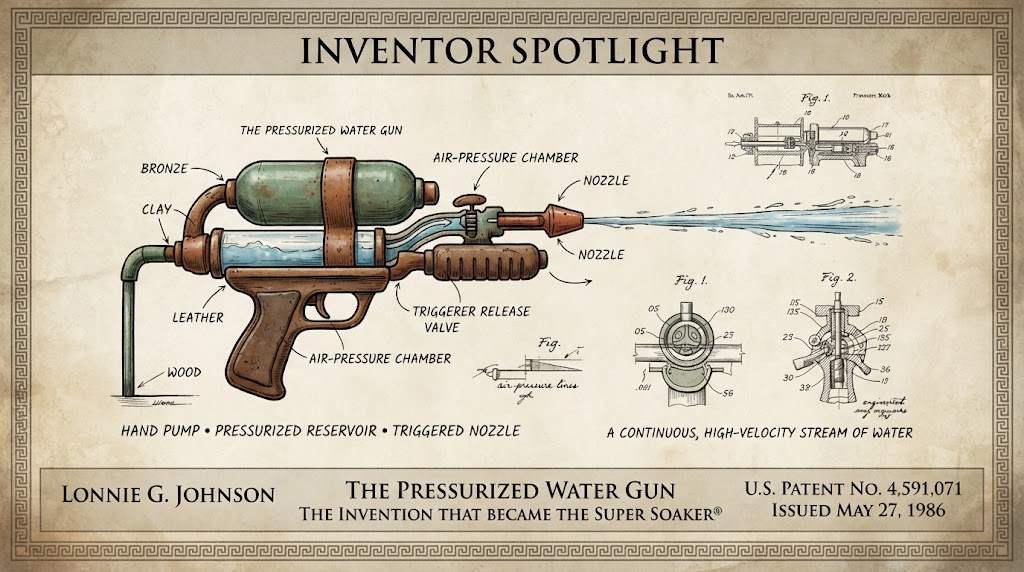
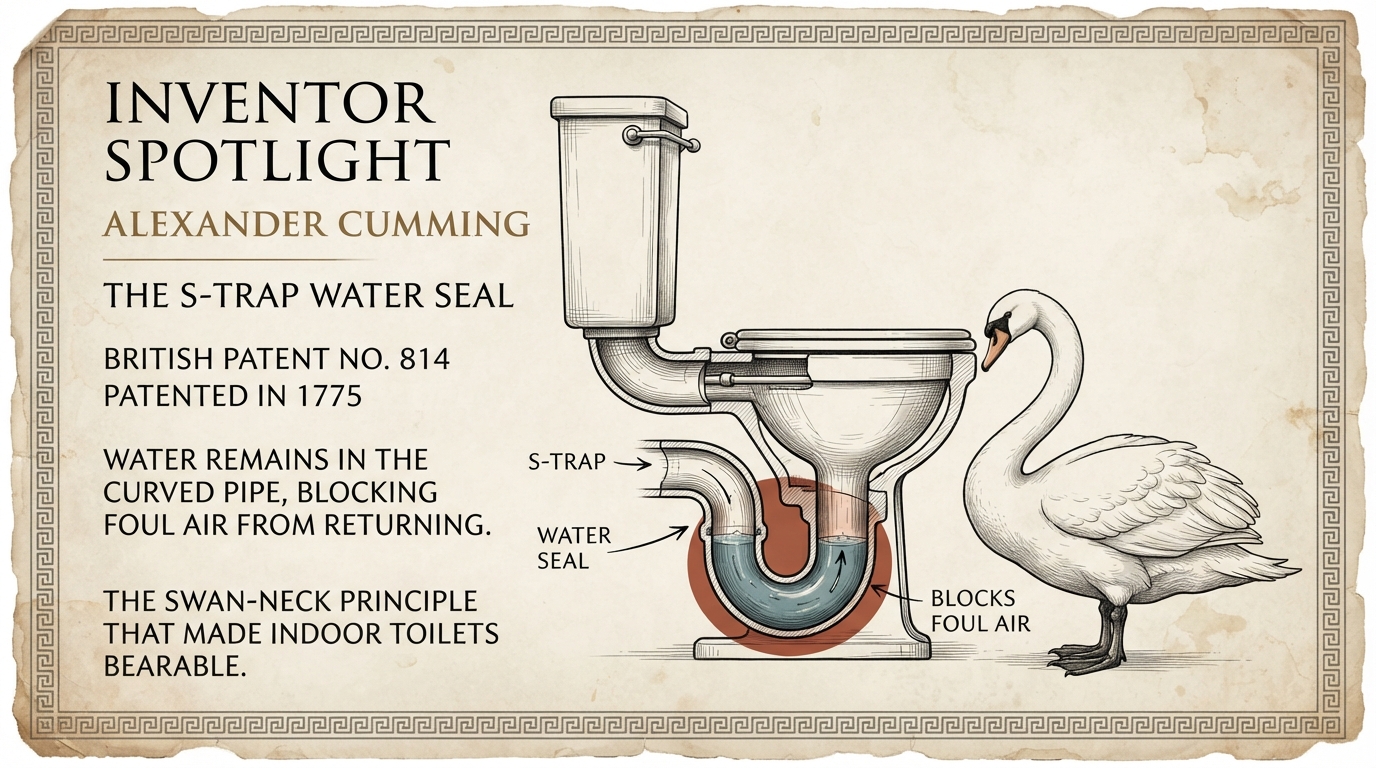
Real inventions become comic solutions to ancient problems. Illustrated Inventor Spotlights step outside the story to credit the person who actually invented each device — and the date history gives it. The ancient versions on screen are comic adaptations, not historical reconstructions.
In the pilot:
The Spyglass — Hans Lippershey, 1608
The Lever — Archimedes of Syracuse, 3rd c. BCE
The Pressurized Water Gun — Lonnie G. Johnson, 1986
The S-Trap Water Seal — Alexander Cumming, 1775
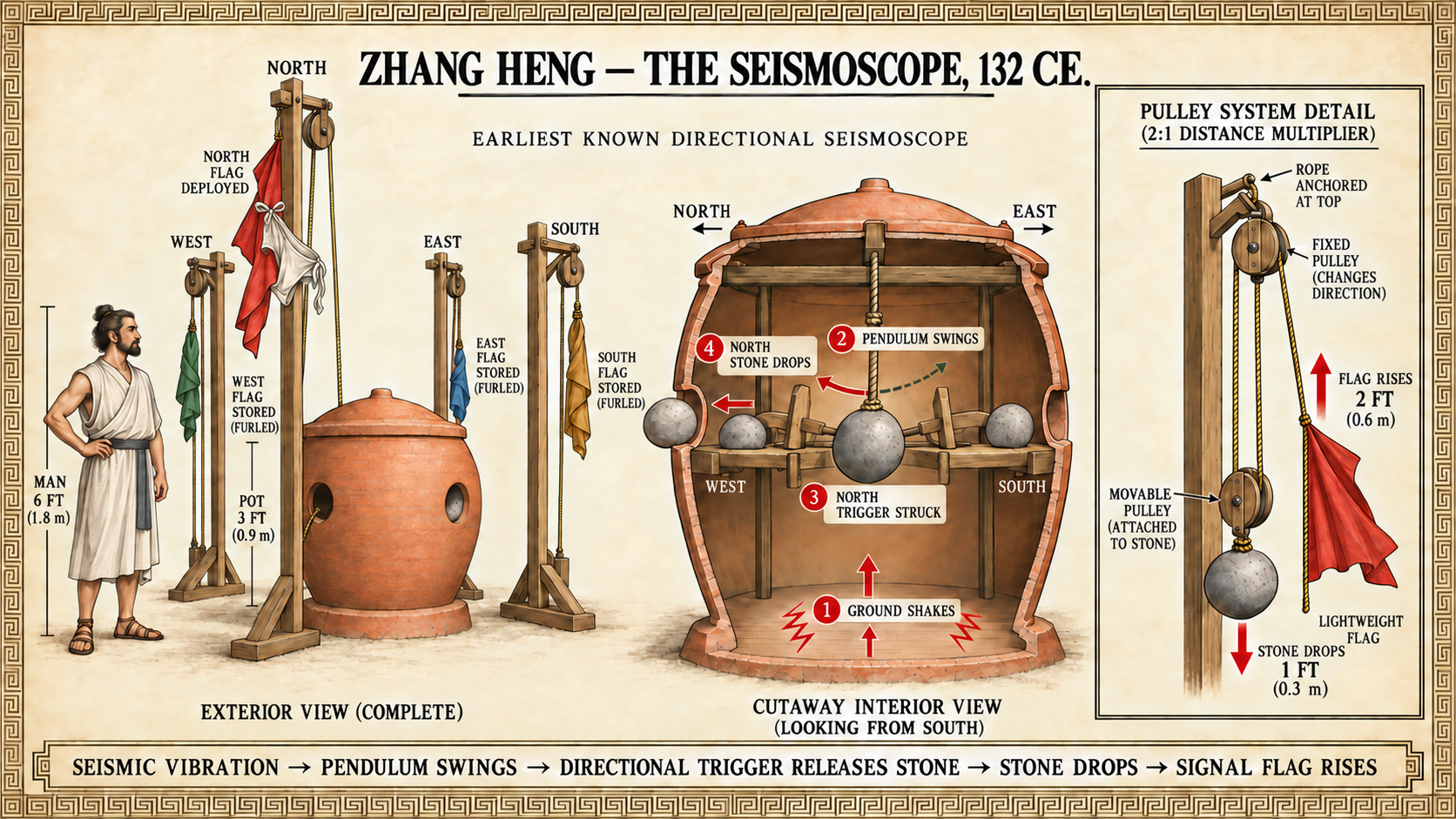
The Seismoscope — Zhang Heng, 132 CE
More each season
Concept artwork for the pilot's Inventor Spotlight cards.
Built to Produce
Archimedes is contained by design. Commercially available standing sets for this period already exist, so the series requires no period construction. The pilot plays across seven locations, four of them within a single palace — rooftop workshop, arena holding cells, town square, throne room, latrina, dining hall, and terrace — and the same core locations recur every week.
Thirteen speaking parts; no battles, no digital environments. Tremors are practical — rippling wine, a rising flag — and the Inventor Spotlights are graphics, not visual effects.
Series Details
Written by: Damian Porcari & Gilda Porcari
Format: Half-hour single-camera historical satire
Setting: A deliberately anachronistic Syracuse, Sicily — 271 BCE
Audience: Smart comedy for curious teens and the adults watching with them
Tonal comps: PLEBS · The Great · The Big Bang Theory
Pilot: "The P.O.O.P. Prize" — complete; available on request
Series: In development — series bible and Season One overview available on request
Seeking: Producing and development partners
Interested?
Request the Pilot
Pilot script, series bible, and Season One overview available on request. Producers and studios: send a production enquiry through the contact form and we'll respond directly.
Request the Pilot
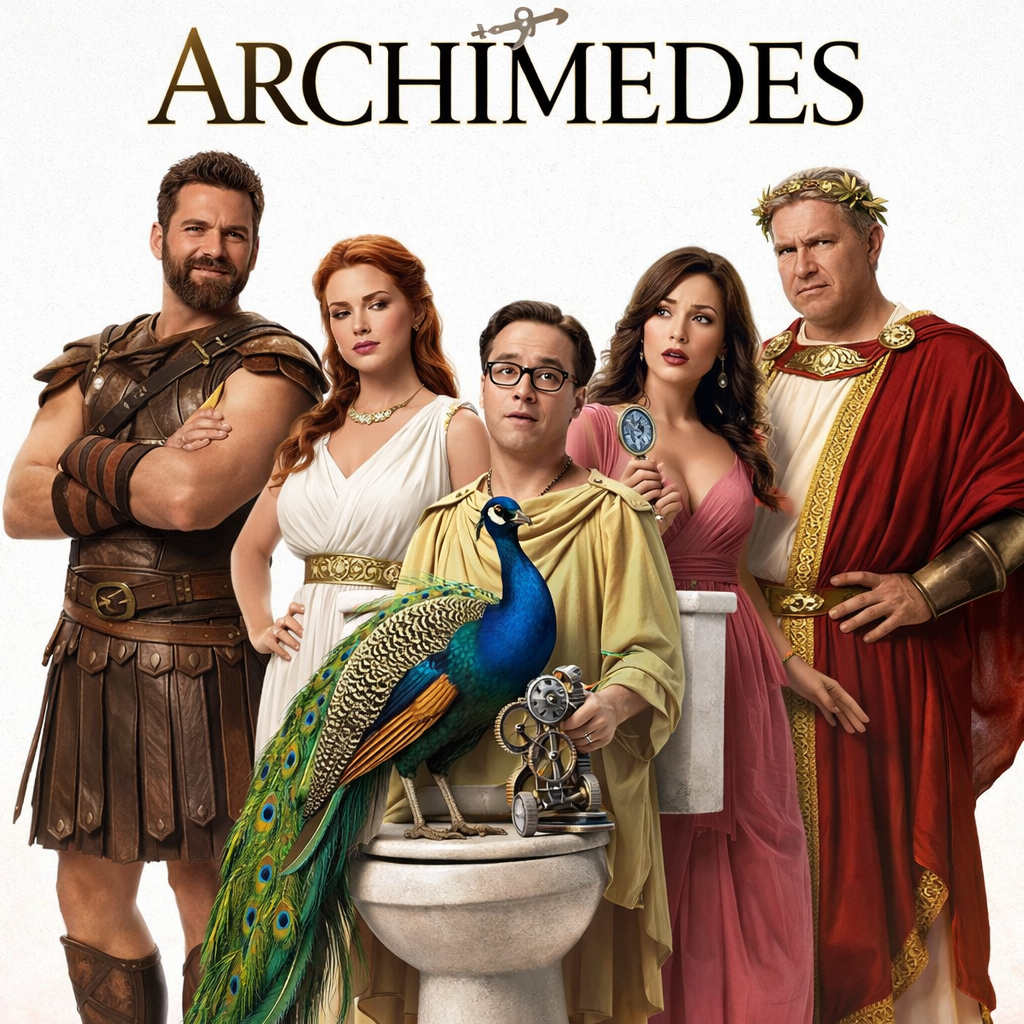 Concept artwork